Summary
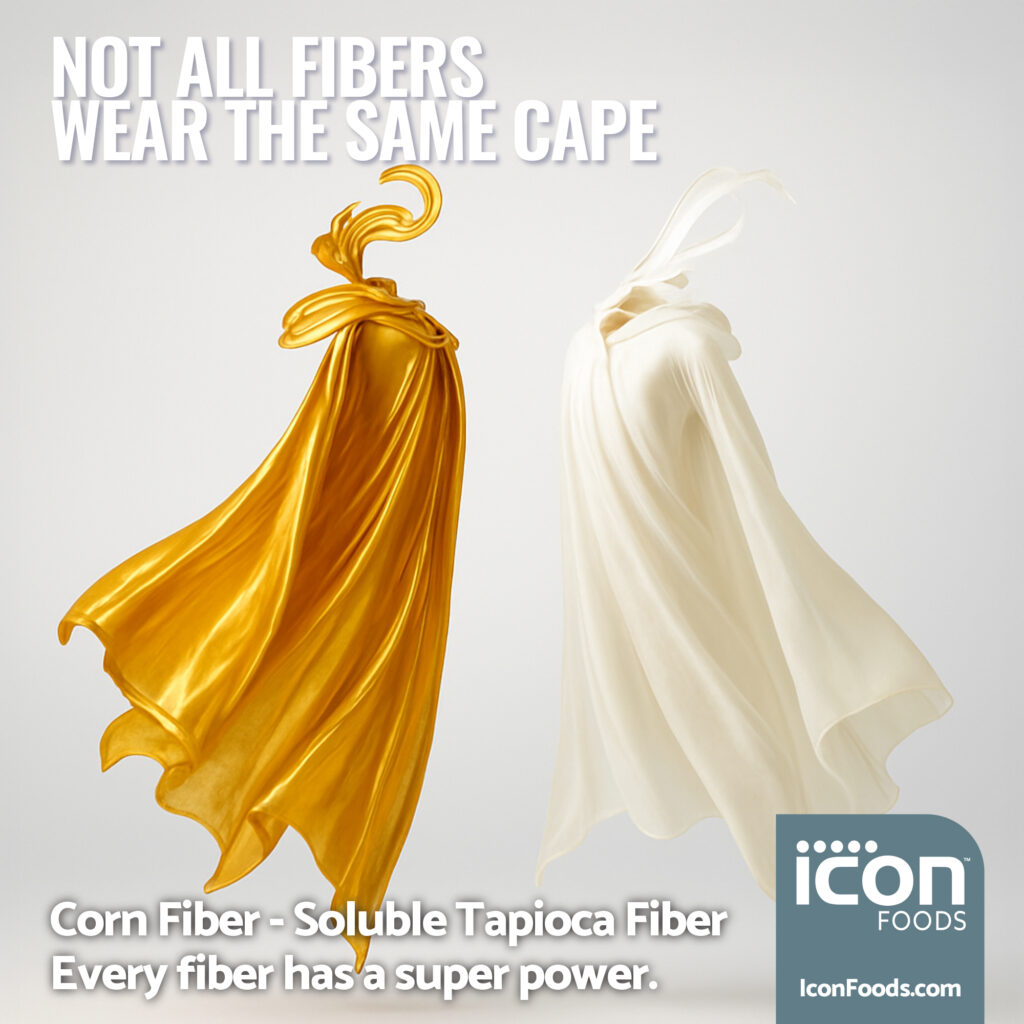
Soluble corn fiber and soluble tapioca fiber each bring functional and nutritional strengths to modern formulation, but tapioca continues to outpace corn on nearly every front. Sourced from non-GMO cassava and boasting fiber content above 90 percent, tapioca delivers a clean-label profile, a neutral sensory footprint, and superior performance across applications from dairy alternatives to baked goods to frozen desserts. Its prebiotic activity supports gut health, its slow glucose absorption aligns with diabetic-friendly development, and its creamy mouthfeel and binding strength unlock richer textures without added sugars or fat. As demand surges for non-Chinese, gluten-free, allergen-friendly, and recognizable ingredients, soluble tapioca fiber — particularly FibRefine™ — is emerging as the go-to choice for brands looking to innovate with confidence and avoid tariff volatility.
Thom King, CFS, Food Scientist
Chief Innovations Officer, Icon Foods
When comparing soluble corn fiber and soluble tapioca fiber, it’s essential to consider their sources, nutritional profiles, functional properties, and applications in food and beverage formulations. Here’s a detailed comparison highlighting why soluble tapioca fiber may be preferred.
Chemical Structure and Composition
- Soluble Corn Fiber: Composed primarily of genetically modified glucose units, soluble corn fiber is a form of resistant dextrin. Its structure allows it to dissolve in water, contributing to its fiber content. It typically contains 70-90% fiber, with the remainder being digestible carbohydrates.
- Soluble Tapioca Fiber: This fiber primarily consists of amylose and amylopectin, components of starch from Non-GMO cassava root. The extraction process converts these starches into a soluble form, yielding a fiber content of around 90% or more. This high fiber content supports its classification as a functional fiber.
Health Benefits
- Digestive Health: Both fibers contribute to digestive health, but non-GMO soluble tapioca fiber may have a slight edge. It can help regulate bowel movements, reduce constipation, and support a healthy gut microbiome due to its prebiotic properties, potentially promoting the growth of beneficial gut bacteria.
- Blood Sugar Control: Soluble corn fiber has been shown to have a minimal impact on blood glucose levels. However, soluble tapioca fiber may offer better benefits for blood sugar management, as it can slow glucose absorption, which is crucial for diabetic-friendly products.
- Cholesterol Reduction: Both fibers may contribute to lower cholesterol levels, but the higher soluble fiber content in tapioca fiber can provide more significant cholesterol-lowering effects, making it advantageous for heart health.
Functional Applications
- Dairy Alternatives: FibRefine™ Non-GMO Soluble tapioca fiber is often used in plant-based yogurts and cheeses to enhance creaminess and mouthfeel without adding fat.
- Baked Goods: In gluten-free baking, soluble tapioca fiber helps retain moisture and improves texture, creating a more desirable crumb structure compared to corn fiber.
- Frozen Desserts: Its gelling properties make it ideal for frozen desserts both plant based and dairy as well as sorbets, providing a stable texture that resists ice crystal formation.
- Beverages: Soluble tapioca fiber can be used to create viscous, creamy beverages such as smoothies and protein shakes, where a thick mouthfeel is desirable. It can also serve as a stabilizer in emulsified products like salad dressings.
- Snack Foods: In snack bars and cookies, soluble tapioca fiber acts as a binding agent, improving texture and providing a source of fiber without unwanted flavors.
Sensory Attributes
- Taste: Soluble corn fiber can sometimes impart a slight sweetness, which might not be desirable in all products. In contrast, soluble tapioca fiber typically has a neutral taste, making it versatile for various applications without altering flavor profiles.
- Mouthfeel: The gel-forming ability of soluble tapioca fiber results in a rich, creamy mouthfeel that enhances the sensory experience of food and beverages, while soluble corn fiber may not achieve the same level of creaminess.
Market Trends and Consumer Preferences
- Clean Labeling: As consumers become more health-conscious, there is a growing trend toward clean-label products. Soluble tapioca fiber, derived from a natural source (non-GMO cassava), aligns well with consumer preferences for recognizable, minimally processed ingredients.
- Gluten-Free and Allergen-Friendly: The demand for gluten-free products continues to rise. Soluble tapioca fiber is a preferred choice in gluten-free formulations, appealing to consumers with celiac disease or gluten sensitivities.
- Health and Wellness Products: With an increasing focus on gut health, soluble tapioca fiber’s prebiotic benefits make it a desirable ingredient in health-oriented products, including functional foods and dietary supplements.
While both soluble corn fiber and soluble tapioca fiber offer unique benefits, soluble tapioca fiber stands out due to its superior functional properties, digestibility, and versatility in food and beverage formulations. Not to mention that FibRefine™ by Icon Foods is a product of Indonesia thus avoiding the extreme tariffs.
As the demand for non-Chinese, clean-label, gluten-free, and functional products continues to grow, soluble tapioca fiber’s role in the food industry is likely to expand. Reach out to your Icon Foods representative for FibRefine™ Soluble Tapioca, samples, documentation formulation and usage guidance.
Since 1999 Icon Foods has been your reliable supply chain partner for sweeteners, fibers, sweetening systems, inclusions and sweetness modulators.
Taste the Icon Difference!
Order Samples!
x