
by Thom King CFS – Founder, Chief Innovation Officer, Food Scientist, Icon Foods
There are ingredients that walk into a formulation wearing a tuxedo. They have a single, glamorous job. Sweeten. Gel. Emulsify. Preserve. Provide protein. Then there is soluble tapioca fiber. It shows up in Timberland work boots.
Need dietary fiber? Sure. Need bulk because you just ripped 8 grams of sugar out of the formula? Yep. Need solids without turning your beverage into wallpaper paste? Absolutely. Need a little more body in a protein shake, coffee creamer, sauce, frozen dessert, bar, or confection? Hand it the wrench.
That is what makes soluble tapioca fiber interesting to formulators. It isn’t necessarily the ingredient consumers are going to write poetry about. It is the ingredient that quietly helps everything else work. And in the increasingly weird world of sugar reduction, high protein, GLP-1-friendly portion sizes, fiber enrichment and cleaner ingredient statements, quietly helping everything else work is becoming a very valuable job description.
First Things First: What the Hell Is Soluble Tapioca Fiber?
The terminology around soluble tapioca fiber can get sloppy, so let’s clean up the kitchen. Many commercially available soluble tapioca fibers are tapioca-derived resistant dextrins produced from cassava starch. Processing changes the carbohydrate structure, creating glycosidic linkages that are less susceptible to digestion by human digestive enzymes.
Instead of behaving like ordinary starch, much of the material resists digestion in the small intestine. That distinction is huge.
FDA guidance recognizes resistant maltodextrin/dextrin among the isolated or synthetic non-digestible carbohydrates that may be declared as dietary fiber under the agency’s enforcement-discretion policy.
There is also specific regulatory history for tapioca-derived resistant dextrin. FDA GRAS Notice 1170 covers resistant dextrin from tapioca in powder or syrup form for use as a dietary fiber source, bulking agent, humectant, texturizer and formulation aid across a remarkably broad range of food categories. FDA issued a “no questions” letter, and the notice closed October 22, 2024. That is important because soluble tapioca fiber isn’t merely nutritional decoration. It is a formulation tool that happens to bring fiber along for the ride.
The Great Sugar Eviction Problem
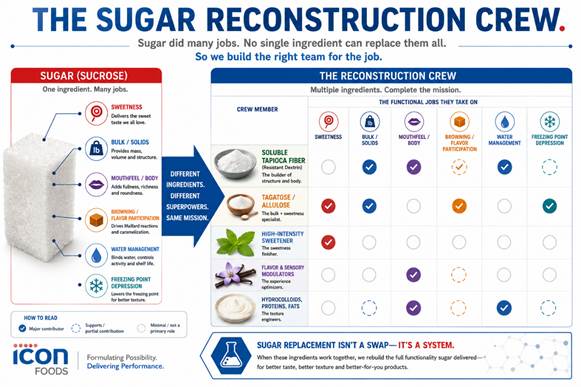
Here is where soluble tapioca fiber earns its paycheck. Every formulator eventually learns the same painful lesson: Sugar is not just sweetness. Remove sucrose and you also remove:
- Solids
- Mass
- Body
- water management
- texture
- freezing-point effects
- browning potential
- mouthfeel
- flavor delivery
- structural contribution
You kick sugar out of the apartment and suddenly discover it was paying half the rent. High-intensity sweeteners can replace the sweetness. They cannot replace the stuff. A few hundred parts per million of stevia, monk fruit, sucralose or a sweet protein may generate enormous sweetness, but those molecules don’t magically replace 8%, 12% or 20% of missing carbohydrate solids.
Welcome to the formulation equivalent of removing an offensive lineman and replacing him with a placekicker. Excellent athlete. Wrong damn job. This is where soluble tapioca fiber becomes extremely useful.
Think of It as Carbohydrate Scaffolding
I like thinking about soluble tapioca fiber as scaffolding. It occupies physical space in the formulation while allowing us to rebuild sweetness around it using other tools. Imagine a conventional product containing: Sugar → sweetness + solids + mouthfeel + functionality. Now reduce the sugar.
Instead of asking one ingredient to replace everything sucrose was doing, split the assignment: Soluble tapioca fiber → solids + fiber + body. Alternative sweetener → sweetness. Hydrocolloids/protein/fat → texture as needed. Flavor modulation → temporal and sensory correction Now we aren’t trying to find a mythical one-for-one sugar replacement. We are reconstructing sugar’s functionality piece by piece. That is a much smarter way to formulate.
The Invisible Fiber Trick
One of the biggest formulation advantages of resistant dextrin is remarkably simple, it dissolves into solution. That sounds boring until you have tried putting meaningful quantities of fiber into a clear beverage. Many traditional fibers announce themselves immediately. Cloudiness. Precipitation. Sediment. Viscosity. Chalkiness. Graininess. Congratulations. Your refreshing peach beverage now drinks like drywall mud.
Resistant dextrins are different. Research describes them as highly water-soluble, relatively low-viscosity materials with good stability to heat and acid. That creates an unusual formulation opportunity, add meaningful carbohydrate solids without necessarily creating meaningful viscosity. For beverages, that is a big deal.
You can build fiber into waters, hydration products, functional beverages, protein drinks, coffee products and powdered drink systems without automatically turning them into shakes. Soluble fiber becomes almost architecturally invisible.
Mouthfeel Without the Milkshake
Low-sugar beverages frequently suffer from something I call diet-product hollowness. You know it immediately. The sweetness is there. The flavor is there. But the middle disappeared. Sugar contributes density and body. Remove enough of it and the beverage can become thin, sharp and strangely empty. Soluble tapioca fiber can help rebuild some of those solids. Not by dramatically thickening the beverage. By increasing the amount of dissolved material occupying the aqueous phase. That distinction is key. We aren’t necessarily trying to create viscosity. We’re trying to create presence. That can be particularly useful in:
- protein beverages
- energy drinks
- hydration products
- coffee beverages
- dairy alternatives
- nutritional beverages
- reduced-sugar juices
- powdered drink systems
Think less thickener. Think more mouthfeel infrastructure.
Now Put It in a Protein Bar
Protein bars are where formulation ingredients go to be interrogated under bright lights. Everything gets exposed. Protein binds water. Fibers bind water. Humectants fight over water. Syrups migrate. Proteins harden. The bar that was beautiful on Day 1 can become construction material by Month 6.
Soluble tapioca fiber can function as part of the carbohydrate phase while contributing fiber, solids, binding and texture. FDA’s GRAS notice specifically identifies applications including nutrition bars, granola bars, confections, baked goods, snacks and plant-based protein products. But there is an important formulation lesson here, fiber is not automatically a softening system.
Do not simply dump soluble tapioca fiber into a high-protein matrix and expect eternal softness. Protein source, glycerin, fat, water activity, syrup composition, reducing sugars, storage temperature and moisture migration are all still sitting around the poker table. Soluble tapioca fiber gives you another card. It doesn’t let you cheat the game.
Frozen Dessert Gets Interesting
Reduced-sugar frozen desserts are particularly unforgiving because sucrose performs several jobs simultaneously. Take it away and you can end up with. sweet enough. Hard enough to repair a driveway.
Soluble tapioca fiber can restore carbohydrate solids and contribute body, but formulators must remember that solids replacement is not equivalent to freezing-point replacement. That is why a sophisticated frozen-dessert system might combine soluble tapioca fiber with ingredients such as:
- tagatose
- allulose
- glycerin
- polyols
- proteins
- hydrocolloids
- fat
Each one handles a different part of the problem. Soluble tapioca fiber brings the lumber. Something else still has to install the HVAC.
Bakery: Where Chemistry Stops Being Polite
Baking adds another layer. Now we have heat, water migration, protein interactions, starch behavior and browning reactions happening simultaneously. Research on cassava-derived resistant dextrin shows that its properties are strongly influenced by processing conditions and molecular structure.
That is a reminder that soluble tapioca fiber is not necessarily a universal specification. Different commercial materials can vary in:
- fiber content
- reducing sugars
- molecular-weight distribution
- color
- DE
- Sweetness
- Hygroscopicity
- solution clarity
- viscosity
- thermal behavior
So don’t formulate from the ingredient name. Formulate from the specification. Two ingredients can both say “soluble tapioca fiber” on the drum and behave differently once the oven hits 350°F. The specification sheet is the scouting report. The ingredient declaration is merely the jersey.
And Then There Is the Gut
Here is where the story moves beyond food engineering. Resistant dextrin largely avoids digestion in the small intestine, allowing some of the carbohydrate to reach the colon, where portions may be fermented by the microbiota. Research literature describes fermentation of resistant dextrin and production of short-chain fatty acids. That creates an intriguing bridge between formulation functionality and nutrition.
Instead of adding an ingredient solely because marketing wants another gram of fiber on the Nutrition Facts panel, we can begin thinking about fiber as something that participates in the food’s physiological architecture. But this is also where formulators need discipline. Contains fiber, “good source of fiber, prebiotic, supports digestive health” and specific microbiome claims are not interchangeable statements.
Ingredient identity, analytical fiber content, serving level, substantiation and regulatory requirements still matter. The marketing department does not get to turn the science knob to eleven because the ingredient sounds healthy.
Why Tapioca?
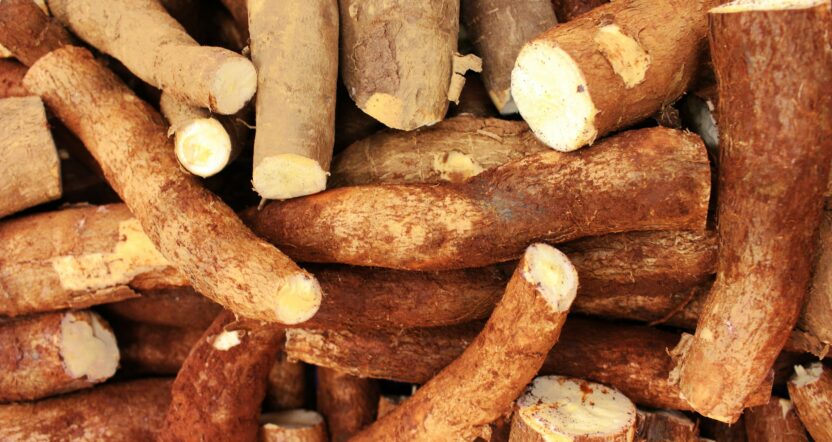
This part is more interesting than it appears. Tapioca comes from cassava, a starch-rich root crop. The native starch itself is extremely digestible. The magic happens when processing reorganizes portions of that carbohydrate architecture into structures that human digestive enzymes have greater difficulty dismantling. That transformation is fascinating. We essentially start with, a very digestible carbohydrate, then deliberately alter its molecular architecture to create a poorly digestible carbohydrate. Same botanical starting point. Different molecular arrangement. Completely different nutritional behavior. Food chemistry is wonderfully strange.
Soluble Tapioca Fiber + Rare Sugars = A Very Interesting Marriage
This is where I think formulators should pay attention. The next generation of sugar reduction probably isn’t going to be dominated by one replacement ingredient. It will be built from systems. Consider tagatose. Tagatose brings meaningful bulk, sugar-like temporal sweetness and reducing-sugar chemistry. But it may not always be economical or technologically desirable to replace every gram of sucrose with tagatose.
Now introduce soluble tapioca fiber. Suddenly we can divide the workload. Tagatose: sweetness + bulk + browning contribution. Soluble tapioca fiber: fiber + bulk + dissolved solids + mouthfeel. High-intensity sweetener: close remaining sweetness gap. Flavor modulator: clean up temporal defects
Now we are building something much closer to sugar’s functional ecosystem rather than chasing a mythical magic molecule. The same strategy can work with allulose and other alternative sweetening systems. This is formulation by committee. Except, unlike most committees, everyone actually has a job.
The Formulator’s Starting Point
There is no universal usage rate because application, fiber assay, solids target and supplier specification matter enormously. But the development sequence should be straightforward. First determine what problem you are asking the fiber to solve. Fiber claim? Sugar displacement? Bulk? Mouthfeel? Binder solids? Humectancy? Calorie reduction? Several simultaneously? Then establish the amount required to achieve that objective.
FDA’s GRAS Notice 1170 describes intended maximum use levels ranging from 1.2 to 15 grams dry basis per serving, depending on food category. That isn’t a formulation recommendation, but it demonstrates the broad range of applications in which tapioca resistant dextrin has been evaluated.
From there, rebuild the formula around total solids rather than simply replacing sugar gram-for-gram. That little shift in thinking prevents a lot of ugly prototypes.
Watch the Whole System
Soluble tapioca fiber is forgiving. It is not supernatural. When increasing it, monitor, brix / soluble solids. Because refractometers measure soluble material, not merely sugar. Water activity, especially in bars, bakery, confectionery and intermediate-moisture foods. Viscosity, low viscosity does not mean zero contribution, particularly at high solids. Flavor release, changing dissolved solids can alter perception even when the fiber itself is relatively neutral. Sweetness, some commercial fibers contain small quantities of digestible saccharides and may contribute slight sweetness. Color, especially in clear beverages. Reducing sugars, critical when thermal processing and proteins are involved. Fiber assay, the number that matters is what survives the appropriate analytical method, not what looked beautiful in your formulation spreadsheet. And, of course, GI tolerance. A prototype containing a heroic quantity of fiber might look fantastic on a Nutrition Facts panel and still be a terrible consumer experience. The digestive tract gets a vote.
Stop Calling Fiber a Nutritional Add-On
This may be the most important point. For decades, product development often treated fiber like nutritional parsley. Develop the product. Get the flavor right. Then sprinkle in enough fiber to make the label prettier. That model is becoming obsolete. Modern reduced-sugar formulation needs ingredients that solve multiple problems simultaneously. Soluble tapioca fiber can potentially participate in, nutrition + solids management + texture + mouthfeel + sugar reduction + formulation flexibility.
That makes it something more interesting than a fiber fortifier. It becomes part of the structural carbohydrate system. And that is a very different way to think about it.
The Quiet Ingredient Era
The food industry loves superheroes. Stevia was going to replace sugar. Monk fruit was going to replace sugar. Allulose was going to replace sugar. Tagatose is going to replace sugar. I have news for you, none of them will. Because sugar isn’t one thing.
Sugar is an entire bundle of functionality disguised as a white crystal. The future belongs to formulation systems capable of rebuilding that bundle. And that means some of the most important ingredients won’t necessarily be the glamorous ones printed across the front of the package.
They will be the ingredients behind the curtain holding the formulation together. Soluble tapioca fiber belongs squarely in that category. It can carry solids. It can deliver dietary fiber. It can help rebuild mouthfeel. It can support sugar-reduction systems. It can disappear into beverages.
It can work across bars, bakery, confectionery, dairy, frozen desserts, sauces, creamers and plant-based products. FDA’s GRAS inventory reflects that unusually broad application range. It isn’t Batman. It is Alfred. And anybody who actually understands Batman knows the whole operation falls apart without Alfred. That is soluble tapioca fiber. Quiet. Useful. Versatile.
And probably doing considerably more work in your next reduced-sugar formulation than anyone will ever give it credit for.
References
- U.S. Food & Drug Administration. GRAS Notice No. 1170: Resistant dextrin from tapioca in powder or syrup form. FDA reports a “no questions” conclusion and lists intended uses including beverages, bakery, bars, confectionery, frozen desserts, coffee creamers and plant-based protein products. FDA GRAS Notice 1170
- U.S. Food & Drug Administration. Guidance for Industry: The Declaration of Certain Isolated or Synthetic Non-Digestible Carbohydrates as Dietary Fiber. FDA identifies resistant maltodextrin/dextrin among the non-digestible carbohydrates covered by its dietary-fiber enforcement-discretion policy. FDA Dietary Fiber Guidance
- Food Chemistry. In-depth study of the changes in properties and molecular structure of cassava starch during resistant dextrin preparation. The research describes how processing conditions affect molecular structure, solubility and dietary-fiber characteristics of cassava-derived resistant dextrin.
- Physicochemical properties and health benefits of resistant starch, resistant dextrin, and polydextrose: Similarities and differences. Review describing resistant dextrin’s solubility, relatively low viscosity, heat/acid stability, digestive resistance and microbial fermentation.