
by Thom King – Founder, Chief Innovation Officer, Food Scientist, Icon Foods and Rachel Zemser, MS, CCS, CFS , A La Carte Connections
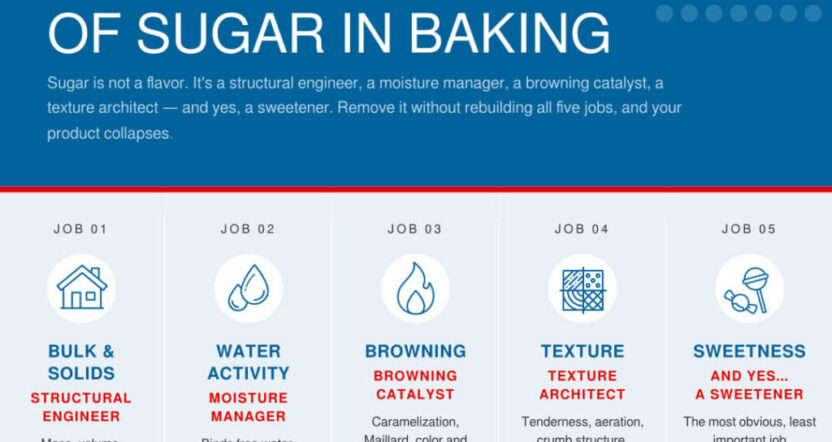
Sugar is not an ingredient. It’s a multi-functional system doing five jobs at once. Remove it without rebuilding those jobs and your product collapses in slow motion: flat flavor, chalky crumb, weird moisture, no browning, short shelf life.
Every failed reduced-sugar product follows the same forensics report: We replaced sweetness and ignored everything else. Let’s fix that.
- Sweetness — The Most Obvious, Least Important Job. What sugar actually does:
- Provides a clean, immediate sweetness curve
- Balances salt, fat, and bitter compounds
- Creates flavor “lift”
Why it’s overrated:
Sweetness is the easiest part to replace and the least likely to break your product.
How to rebuild it properly:
Primary tools:
- Stevia (Reb M / optimized Reb A systems RA99M, RM95D)
- Monk fruit (V25–V50, LS, LS4)
- Thaumatin / modulators (thaumatin layer)
Reality check. High-intensity sweeteners are top notes, not body.
If sweetness is all you replace, you get:
- Hollow flavor
- Bitter tail
- Metallic edges
Correct approach. Build a layered sweetness system:
- Base: bulk sweetener
- Top: stevia + monk fruit
- Finish: modulators (optional, powerful)
- Bulk & Solids, The Structural Backbone
What sugar does:
- Adds mass and volume
- Controls mixture viscosity
- Impacts spread, rise, and final geometry
Remove sugar and you remove physical structure. That’s why reduced-sugar products end up with a pancake like spread, or hockey puck-like density.
How to rebuild bulk. Primary tools:
- Tagatose → closest functional mimic to sucrose, browning and crystallization capabilities
- Allulose → performs similarly to sucrose but without crystallization capabilities
- Maltitol → strong bulking + sweetness
- Erythritol → bulking + mild sweetness
- Isomalt → structural stability, low hygroscopicity
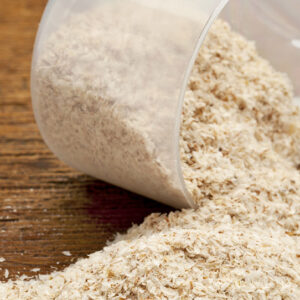
- Fibers (tapioca, inulin, polydextrose) → increases solids +improves viscosity
Formulation truth: You are not replacing grams of sugar with grams of sweetener. You are rebuilding your “solids” system.
- Water Activity & Humectancy, Shelf Life and Softness
What sugar does:
- Binds free water at the molecular level
- Lowers water activity (aw)
- Slows and prevents microbial growth
- Maintains softness over time acting as a humectant
Remove it and you get:
- Dry, crumbly texture on day one
- Brick by day three
How to rebuild it. Primary tools:
- Tagatose and Allulose → both are excellent humectants
- Vegetable glycerin (Glycera™ organic coconut vegetable glycerin) → elite moisture control
- Maltitol → moderate humectancy
- Isomalt → Lowers water activity without attracting moisture (for confectionary applications)
- Powdered Fibers → water binding (varies widely)
Critical insight: Water activity is not just shelf life. It’s texture over time. Glycerin, a polyol, is the quiet ninja assassin. Used right, it extends softness without screaming on label.
- Browning — Flavor and Visual Cues
What sugar does:
- Drives caramelization (without proteins)
- Fuels Maillard reactions (with proteins)
- Creates color, aroma, and perceived doneness
No browning = consumer distrust. Pale cookie = “this is diet food and I regret buying it.”
How to rebuild it. Primary tools:
- Allulose and Tagatose → browns faster than sucrose (handle with care)
- Reducing sugars (in systems) → controlled browning
- Protein systems → enable Maillard reactions
Danger zone: Allulose and tagatose can go from golden → burnt faster than a bad decision at a trade show bar. Control:
- Temperature
- Time
- pH
- Moisture
- Texture, The Make or Break Variable
What sugar does:
- Tenderizes by interfering with gluten development in baked goods
- Traps air during creaming
- Controls spread in baked goods
- Influences crumb structure in cakes
This is where most formulations die. What happens when you remove sugar:
- Tough crumb
- Poor aeration
- Dense structure
- Wrong spread behavior
How to rebuild it. Primary tools:
- Tagatose and Allulose → tenderization + spread contribution
- Maltitol → body + chew
- Glycerin → softness + plasticity
- Fibers → structure (but can over-tighten if abused)
Key insight: Texture is not one variable. It’s the interaction of moisture, solids, and fat.
Putting It All Together
Here’s the part most people skip. You don’t replace sugar with one ingredient.
You rebuild its entire system.
A Functional Replacement Framework
| Function | Primary Tools |
| Sweetness | Stevia, Monk Fruit, Thaumatin |
| Bulk | Tagatose, Allulose, Maltitol, Isomalt, Fibers |
| Water Activity | Maltitol, Isomalt, Glycerin, Allulose, Tagatose |
| Browning | Tagatose, Allulose, Reducing sugars |
| Texture | Allulose, Maltitol, Isomalt, Fibers |
That’s not a swap. That’s a reconstructed system.
Final Takeaway
If your reduced-sugar product fails, it’s not because:
- Consumers don’t want less sugar
- Ingredients “don’t work”
It’s because the formulation treated sugar like a flavor. Sugar is not a flavor. It’s:
- A structural engineer
- A moisture manager
- A browning catalyst
- A texture architect
- And yes… a sweetener
Ignore four of those five jobs, and the product will remind you. Brutally.
Reach out to your Icon Foods representative for TagaLite tagatose, MLT1100™ NF Grade Maltitol Powder, MLT1075™ NF Grade Maltitol Syrup, IMT1020™ NF Grade Isomalt, KetoseSweet™ Allulose, Glycera™ Organic Coconut Vegetable Glycerin, MonkSweet™ LS4, FibRefine™and PreBiotica™ fibers samples, documentation formulation and usage guidance.
Since 1999 Icon Foods has been your reliable supply chain partner for sweeteners, fibers, sweetening systems, inclusions and sweetness modulators.
Taste the Icon difference.
Rachel Zemser can be found at A La Carte Connections – https://www.linkedin.com/in/culinologist/ and www.alacarteconnections.com