
by Thom King CFS – Founder, Chief Innovation Officer, Food Scientist, Icon Foods
One of the first questions I hear from formulators is, “Can I simply replace sugar with tagatose?” The short answer? Yes. The better answer? Sometimes. And therein lies the fun.
Replacing sucrose with tagatose isn’t like swapping one football player for another identical athlete waiting on the bench. It’s more like replacing your quarterback with another quarterback who has a stronger arm, runs faster, but reads defenses differently. The position is the same. The game changes.
Understanding those differences is what separates a decent formulation from one that makes customers wonder how you pulled it off.
Sugar Does More Than Sweeten
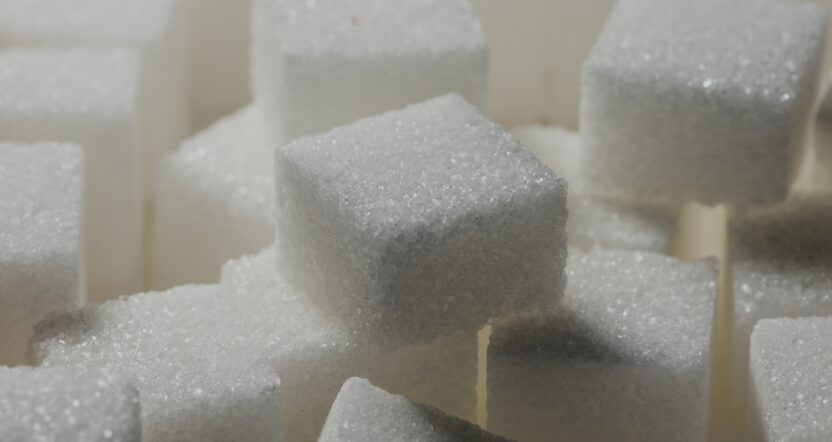
Many formulators think of sugar as a sweetener. It isn’t. Sugar is one of the hardest-working ingredients in the formulation. It provides:
- Sweetness
- Bulk
- Mouthfeel
- Water activity control
- Freezing point depression
- Browning
- Fermentation substrate
- Texture
- Viscosity
- Preservation
- Moisture retention
- Crystallization control
It is simultaneously a flavor ingredient, a processing aid, and a structural component. Remove it carelessly and the whole formulation can wobble like a three-legged table. Fortunately, tagatose carries far more of sugar’s functionality than almost any other alternative sweetener.
Why Tagatose Is Different
Unlike high-intensity sweeteners that contribute almost no mass, TagaLite™ Tagatose is a real sugar. It is a monosaccharide. It has weight. It dissolves. It browns. It caramelizes. It freezes. It binds water. It contributes solids. In many applications it behaves much closer to sucrose than stevia, monk fruit, sucralose, or even allulose. That makes it one of the easiest rare sugars for formulators to work with.
Sweetness
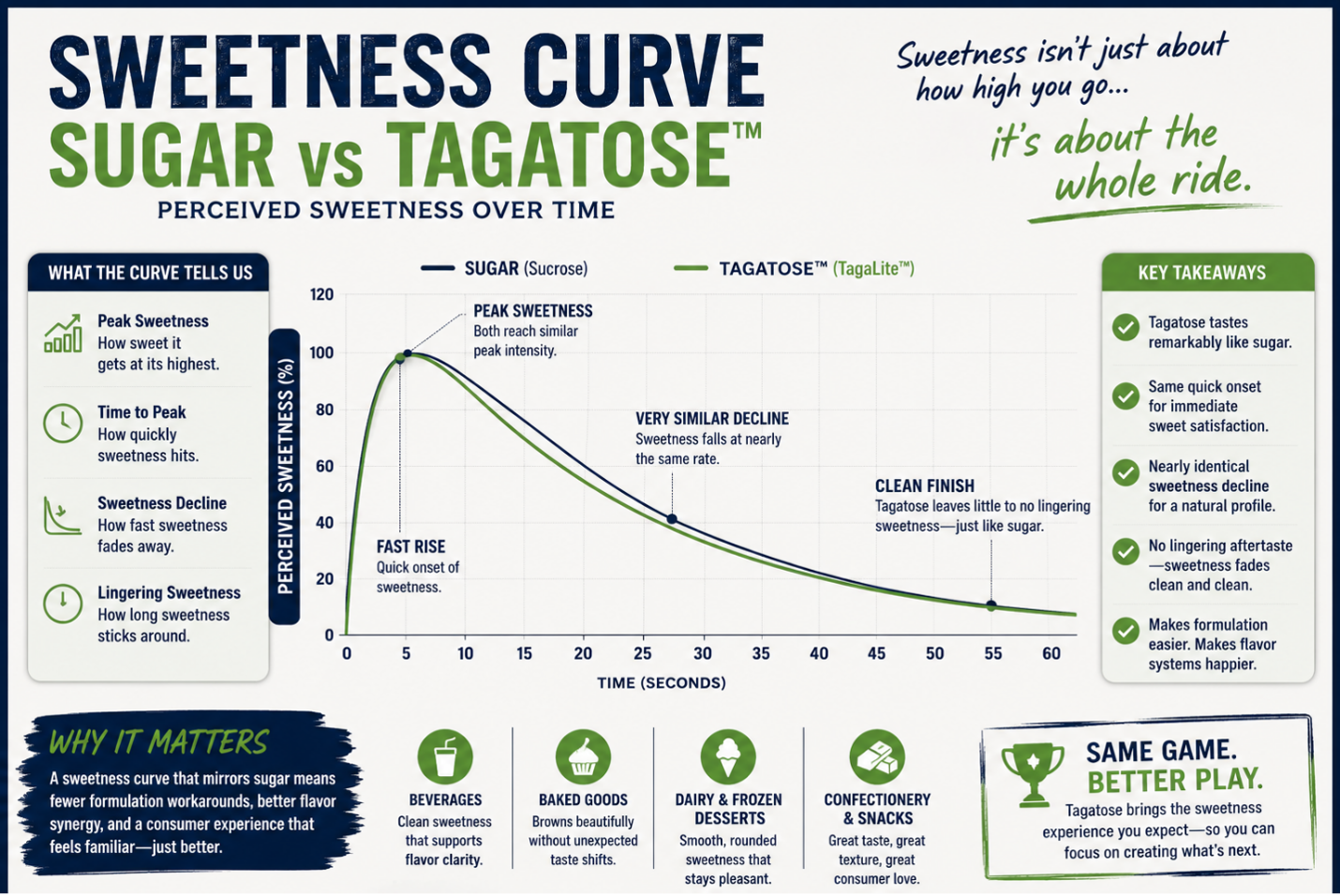
Tagatose delivers approximately 90 to 92% of the sweetness of sucrose. That means replacing sugar gram-for-gram often gets you remarkably close. Many consumers cannot detect the slight reduction. Others actually prefer it because the sweetness is softer and more rounded. Unlike many high-intensity sweeteners, there is:
- little bitterness
- little metallic character
- no licorice note
- very little lingering sweetness
Its sweetness curve closely follows sugar, making flavor systems easier to build.
The Good News
In many products you really can substitute tagatose directly. Examples include:
- Protein powders
- Dry beverage mixes
- Coffee creamers
- Yogurt
- Frozen desserts
- Chocolate
- Gummies
- Nutritional beverages
- Nutrition bars
- Sauces
- Syrups
- Dairy products
In these systems, tagatose often behaves remarkably like sugar. Sometimes the formulation works on the first bench sample. Those are good days.
The Not-Quite-So-Good News
There are applications where a straight substitution requires adjustment. That’s not because tagatose is deficient. It’s because chemistry always gets a vote.
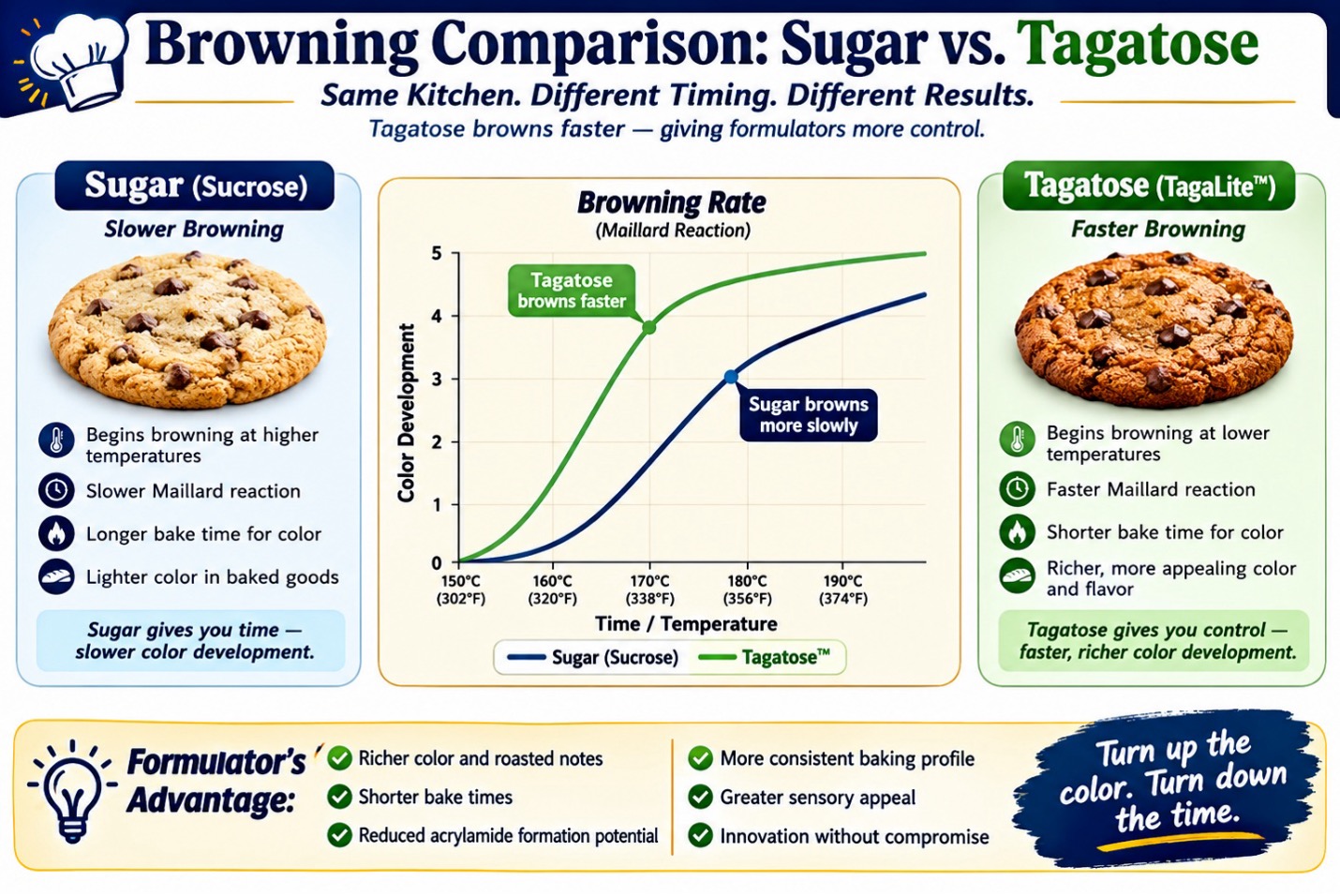
Browning Happens Faster
Tagatose participates in the Maillard reaction more readily than sucrose. That means:
- darker cookies
- richer crust color
- faster caramelization
- deeper roasted flavors
For baked goods this can be a tremendous advantage. For light-colored products, however, you may need to:
- lower baking temperatures
- shorten bake time
- adjust oven profile
Think of tagatose as showing up early for work.
Fermentation
Unlike sucrose, yeast utilization of tagatose is limited. In yeast-leavened products:
- fermentation behavior changes
- proofing time may require adjustment
- sugar available for yeast metabolism may decrease
Many bread systems benefit from retaining a portion of sucrose while replacing the remainder with tagatose.
Freezing Point
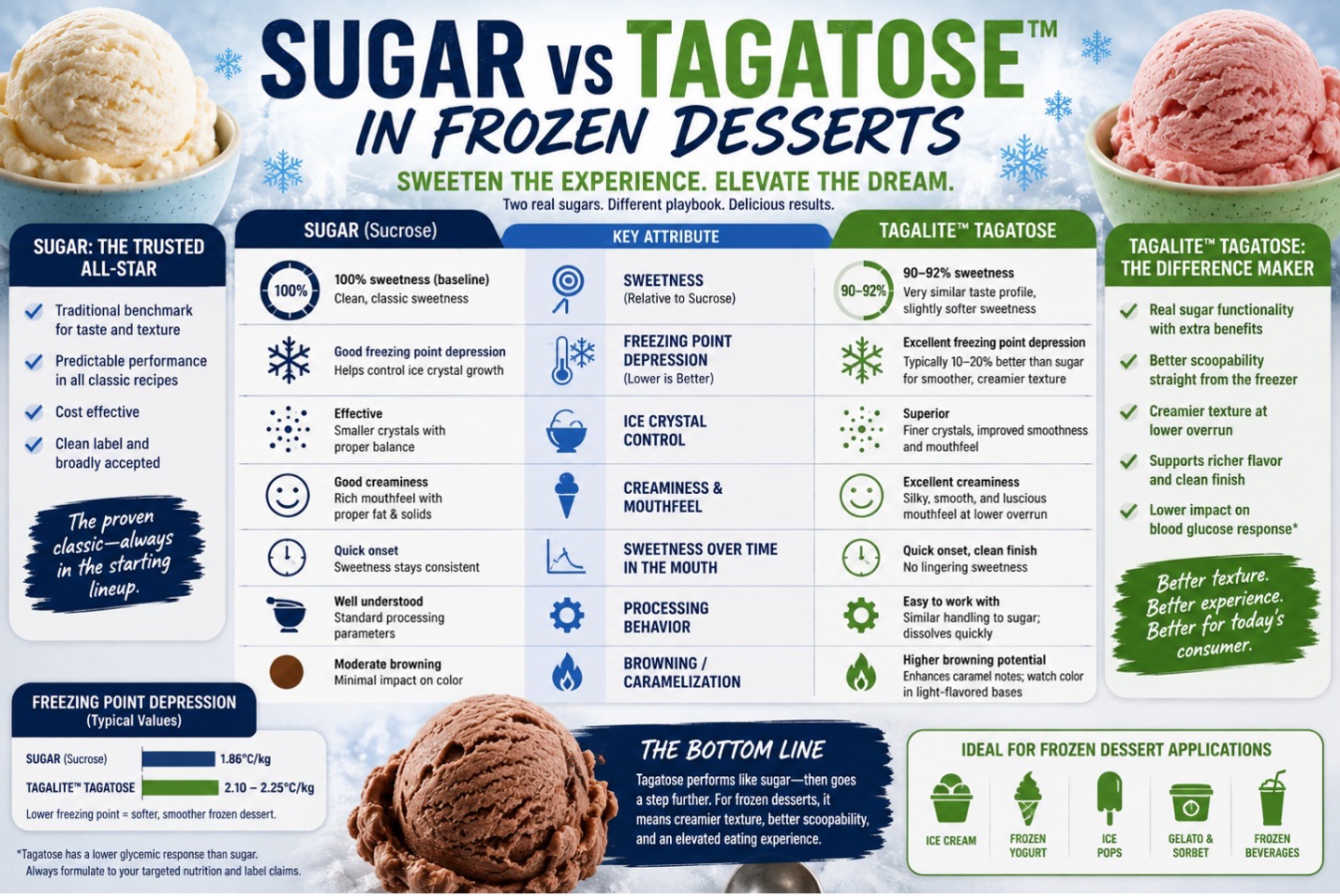
Tagatose depresses freezing point effectively. That’s excellent news for:
- ice cream
- frozen desserts
- frozen beverages
You often gain:
- softer scoopability
- reduced ice crystal formation
- smoother texture
A frozen dessert formulator may find this to be one of tagatose’s greatest strengths.
Water Activity
Tagatose binds water effectively. That influences:
- shelf life
- softness
- moisture migration
- microbial stability
This makes it valuable in:
- baked goods
- bars
- confectionery
Understanding water activity remains critical when reformulating.
Solubility
Tagatose is highly soluble. It dissolves readily in beverages and syrups. That makes processing relatively straightforward compared with certain polyols that require additional heat or mixing.
Flavor Enhancement
One pleasant surprise formulators frequently notice is how tagatose supports flavor. Because its sweetness profile closely resembles sucrose, many flavor systems require less compensation. Fruit tastes brighter. Chocolate tastes fuller. Coffee tastes smoother. Vanilla feels richer. Instead of fighting your sweetener, your flavors start playing on the same team.
What About High Replacement Levels?
Can you replace all the sugar? Sometimes. Should you? That depends entirely on the application. Many successful commercial products use, 25% replacement, 50% replacement, 75% replacement or near-complete replacement. Low sugar is the new no sugar. The optimal level depends on your: processing, texture, browning, water activity, sweetness target, cost objectives and labeling goals. There is no universal magic number. There is only the right number for your formulation.
Think Like a Formulator, Not a Recipe Follower
The best formulators don’t ask: “Can I substitute ingredient A for ingredient B?” They ask: “What job is sugar performing in this formulation?”
Once you identify sugar’s job, selecting the right replacement strategy becomes much easier. Sometimes tagatose can perform every one of those jobs. Sometimes it needs a teammate. Perhaps a little soluble fiber. Perhaps a high-intensity sweetener. Perhaps a texture modifier. Championship formulations are almost never built by one ingredient working alone. They’re built by a roster where every player knows their assignment.
Practical Starting Points
When beginning bench work:
| Product | Suggested Starting Point |
| Beverages | 100% replacement trial |
| Dairy | 100% replacement trial |
| Chocolate | 75 to 100% |
| Frozen Desserts | 75 to 100% |
| Gummies | 50 to 100% |
| Nutrition Bars | 50 to 100% |
| Cookies | 50 to 100% with bake adjustment |
| Cakes | 50 to 75% initially |
| Yeast Bread | 25 to 50% initially |
| Sauces & Syrups | 75 to 100% |
Bench work should always confirm the optimum level.
The Bigger Picture
For decades, formulators had to choose between functionality and sugar reduction. High-intensity sweeteners delivered sweetness but little else. Polyols offered bulk but often came with cooling effects or digestive limitations. Tagatose changes that equation. It doesn’t simply replace sweetness. It replaces much of what makes sugar valuable in the first place.
That’s why it has become one of the most exciting tools available to today’s food and beverage formulator.
Final Thoughts
Can you substitute tagatose for sugar? Absolutely. Can you substitute it in every product without changing anything else? Probably not. But here’s the exciting part. You don’t have to. Because tagatose brings so much of sugar’s functionality with it, you’re already starting the game on the 40-yard line instead of your own goal line. The remaining yards are simply formulation. And that’s where the fun begins.
References
- Levin, G. V. (2002). Tagatose, the new GRAS sweetener and health product. Journal of Medicinal Food.
- Levin, G. V., & Bertolo, R. F. P. Research on the physicochemical properties and food applications of D-tagatose.
- FAO/WHO Joint Expert Committee on Food Additives (JECFA). Safety evaluation of D-tagatose.
- U.S. Food and Drug Administration (FDA). Guidance on the declaration of D-tagatose in Nutrition Facts labeling.
- International Journal of Food Science & Technology. Studies evaluating Maillard browning and functionality of tagatose in baked systems.
- Global Prebiotic Association. Recognition of D-tagatose as a prebiotic ingredient.
- Livesey, G. (2003). Health potential and metabolic characteristics of D-tagatose.
- O’Donnell, K., & Kearsley, M. Sweeteners and Sugar Alternatives in Food Technology. Wiley-Blackwell.