

by Thom King CFS – Founder, Chief Innovation Officer, Food Scientist, Icon Foods
Anybody who has owned a dog long enough has probably experienced this ritual. Dog has gastrointestinal issues. Dog looks miserable. You start worrying. Somebody says, “Give him some pumpkin.” And strangely enough, a lot of the time it seems to help. Pumpkin has become the Leatherman’s Tool of canine digestive folklore. Loose stool? Pumpkin. Constipation? Pumpkin. Dog ate something in the backyard that definitely wasn’t food? Pumpkin. But here is the interesting question for pet food formulators: Why? There is nothing magical about the color orange. The more interesting answer is fiber.
And once we understand what different fibers are doing inside the canine gastrointestinal tract, pumpkin becomes less of a home remedy and more of a formulation lesson.
Pumpkin Is Basically a Fiber Delivery System Wearing a Halloween Costume
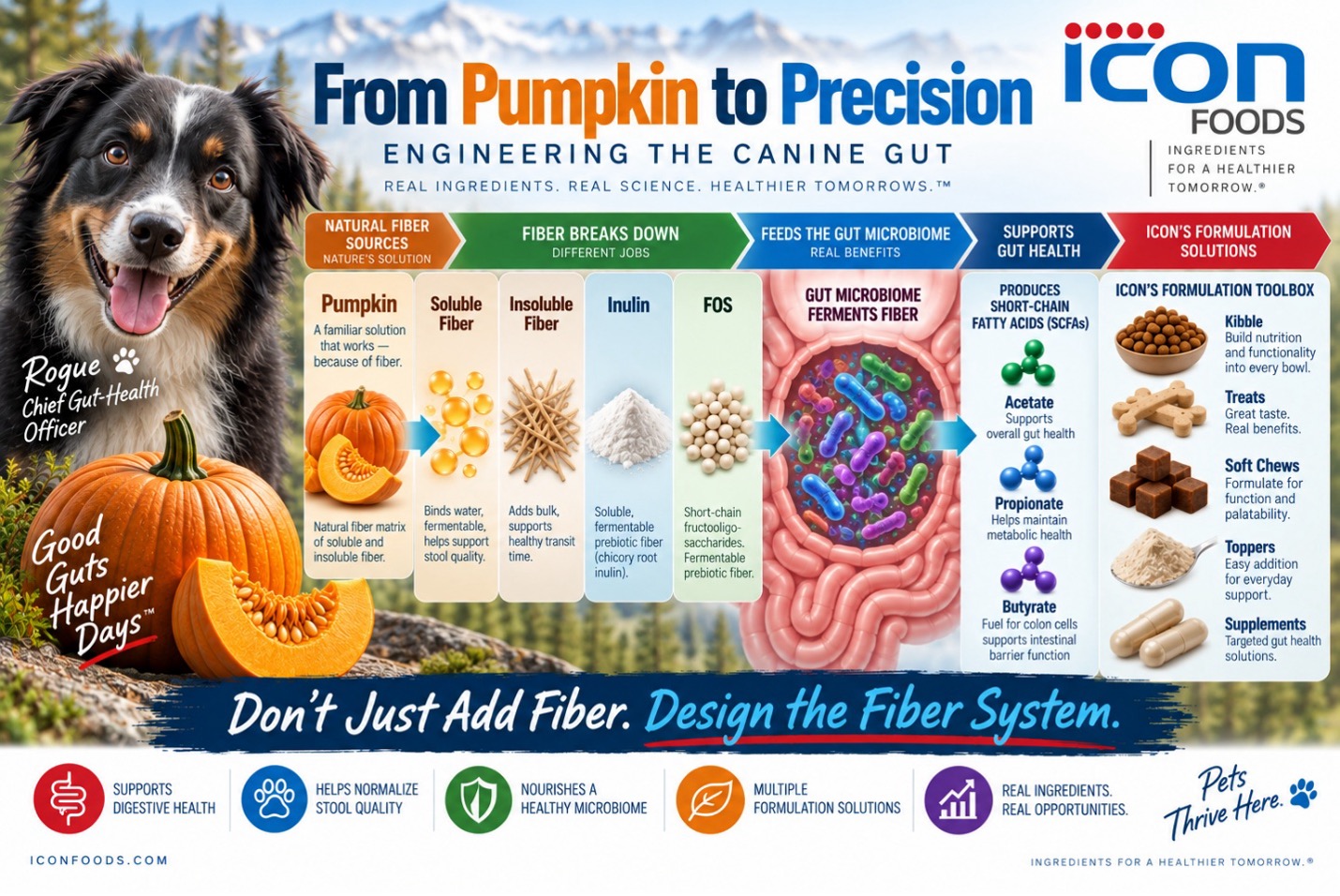
Pumpkin contains a mixture of soluble and insoluble dietary fibers. That distinction is key.
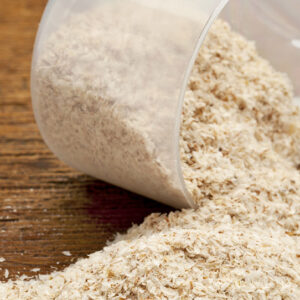
Insoluble fiber contributes bulk and can influence intestinal transit. Soluble fibers interact with water and, depending upon their structure, can also be fermented by microorganisms living in the colon. That means fiber isn’t simply something that passes through the animal. Some fibers become food for the ecosystem living inside the animal. That’s where things get interesting.
Research on canine and feline gastrointestinal health increasingly describes dietary fiber according to characteristics including solubility, fermentability and viscosity, rather than treating “fiber” as one nutritional bucket. Those characteristics can influence stool characteristics, digestion and microbial fermentation.
Think of pumpkin as the utility player. It contributes several types of fiber and plenty of water. That combination can help explain why it has developed such a reputation for helping normalize stool consistency. But formulators can go considerably further.
Instead of adding pumpkin and hoping for digestive pixie dust, we can intentionally design the fiber system.
Meet the Gut Microbiome
The canine gastrointestinal tract contains a complex microbial community. Those organisms aren’t passengers riding around in the dog’s colon waiting for something interesting to happen. They participate in metabolism. When certain fermentable carbohydrates reach the colon, microorganisms can metabolize them and produce compounds including short-chain fatty acids, or SCFAs. The big three you’ll hear about are: Acetate. Propionate. Butyrate.
These microbial metabolites are one reason fermentable fibers have become such an interesting area of companion-animal nutrition. In research involving dogs, supplementation with inulin-type prebiotic fructans increased fecal short-chain fatty acid concentrations and altered portions of the fecal microbial population. That’s a very different nutritional proposition than simply saying, “Contains fiber.” We are moving toward, “What does this particular fiber actually do once it reaches the microbiome?” That is where pet nutrition is heading.
Inulin: Pumpkin’s More Precise Cousin
Now things get particularly interesting for formulators. Inulin is a soluble, fermentable fiber. It occurs naturally in plants, with chicory root being one of the best-known commercial sources.
The Association of American Feed Control Officials, a non-profit, voluntary organization that sets nutritional standards, ingredient definitions, and labeling guidelines for pet food and animal feed in ( AAFCO), specifically recognizes inulin as a plant-derived soluble, fermentable fiber and defines dried chicory root as a source of inulin. This gives pet food formulators something pumpkin can’t necessarily provide, precision. Pumpkin is a food. Inulin is a formulation tool.
If I am developing a kibble, soft chew, functional treat, powder or digestive supplement, I don’t necessarily want to throw enough pumpkin into the formula to deliver the fiber functionality I am targeting. Pumpkin brings water, carbohydrate, flavor, color, solids and variability along for the ride. Purified fibers allow us to engineer the system much more deliberately.
And Then There Is FOS
Fructooligosaccharides, or FOS, are shorter-chain fructans. AAFCO defines fructooligosaccharide as a carbohydrate composed of short-chain fructose units with a terminal glucose unit and establishes compositional requirements for ingredients sold under that definition.
More importantly for formulators, FOS is fermentable. In one canine study, researchers supplemented diets with 1.5 g FOS/kg diet and evaluated changes in fecal microbial populations, fermentation products and nutrient digestibility. The researchers were specifically interested in whether prebiotic supplementation could influence colonic fermentation, particularly in higher-protein diets. That last part should get the attention of anybody formulating modern pet foods. Because what has happened to pet food over the last decade?
Protein. Protein. More protein.
Consumers see meat and protein as quality cues. Dogs see amino acids. Gut microbes see whatever escapes digestion upstream. High-protein formulation therefore makes managing the entire gastrointestinal ecosystem increasingly interesting. The answer isn’t necessarily less protein. It may be smarter fiber architecture.
Pumpkin + Inulin: Now We’re Cooking
Here’s where the science gets particularly fun. Research presented at the 2023 ACVIM Forum evaluated combinations of fibers including pumpkin, inulin, psyllium, oat fiber, beet pulp and citrus fiber. Different blends produced different microbial and fermentation responses.
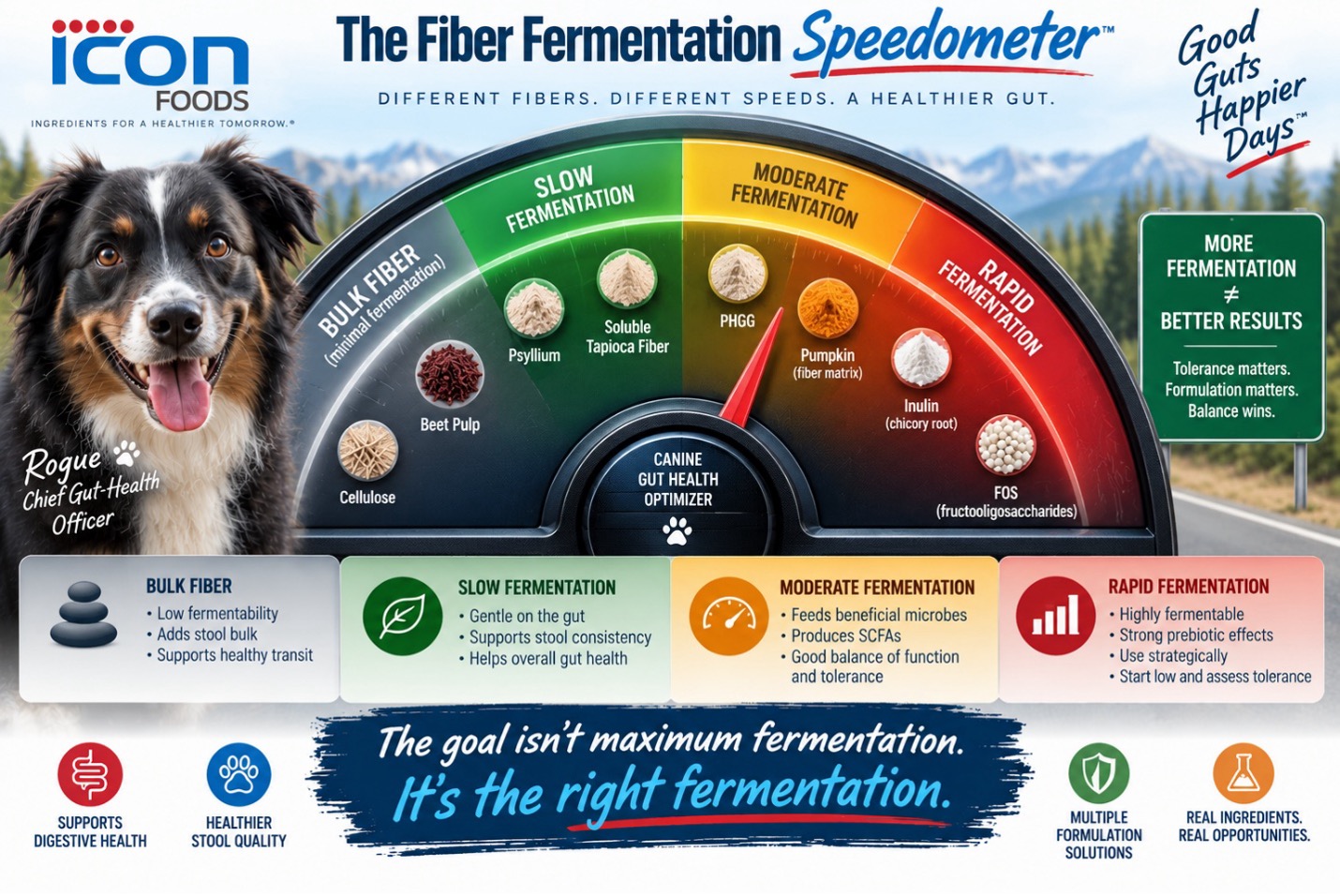
One combination containing inulin, psyllium and pumpkin improved several measured characteristics of the gastrointestinal environment. Even more interestingly, an in-vitro fermentation experiment evaluating pumpkin and inulin individually and together found that the pumpkin + inulin combination produced particularly strong responses, including increased short-chain fatty acid production and shifts in Bifidobacteria and Lactobacillus. That tells us something important. The future probably isn’t, the one magical fiber. Nutrition rarely works that way. The smarter strategy is often a fiber portfolio. Different fibers. Different chain lengths. Different solubilities. Different fermentation rates. Different jobs. That’s an orchestra, not a kazoo.
This Is Where Icon Foods Gets Interesting
At Icon Foods, we’ve spent years looking at fiber primarily through the lens of human food formulation. Sugar reduction. Bulking. Water management. Texture. Solids replacement. Prebiotic formulation. Mouthfeel.
But the underlying carbohydrate chemistry doesn’t suddenly stop existing because the consumer has four legs and an unhealthy fascination with tennis balls. The pet nutrition category presents a fascinating opportunity to apply that same formulation mindset. Our fiber toolbox includes ingredients such as:
PreBiotica™ Chicory Root Inulin
A familiar soluble, fermentable fiber that can be incorporated into pet foods, treats and supplement systems where formulators want to explore prebiotic fiber functionality.
PreBiotica™ FOS
Shorter-chain fructooligosaccharides provide another lever for designing fermentable carbohydrate systems.
FibRefine™ Fiber Systems
Our broader soluble-fiber portfolio gives formulators additional tools for manipulating solids, texture, water activity, processing characteristics and nutritional positioning depending upon the application.
And that’s the key. Don’t formulate around an ingredient name. Formulate around the job you need the fiber to perform.
Pet Food Isn’t One Application
This matters because “pet nutrition” includes products with wildly different processing requirements. A dry extruded kibble has very different constraints from a baked biscuit. A soft chew has different water activity requirements than a powdered supplement. A refrigerated fresh-food product isn’t remotely the same formulation problem as a dental chew. The fiber system therefore has to work both biologically and physically. That’s where food science earns its kibble. A fiber might be nutritionally attractive but destroy texture. Another might ferment beautifully but create unacceptable gastrointestinal tolerance at the intended inclusion. Another might provide excellent solids replacement but contribute too much viscosity. Another might help create the exact soft-chew texture you’re looking for while simultaneously adding fermentable substrate. Formulation is always a negotiation.
Don’t Turn the Microbiome Into a Marketing Circus
There is another important point here. We need to resist what the human supplement industry occasionally does spectacularly well, taking promising science and strapping a rocket to the claim department. Prebiotic fibers are not drugs. Pumpkin doesn’t “cure” gastrointestinal disease. Inulin doesn’t magically create a perfect microbiome. FOS isn’t fairy dust. Fiber can influence the gastrointestinal environment, but responses depend upon the animal, diet, fiber type, dose, fermentability and overall nutritional context. Even pumpkin isn’t universally appropriate for every dog or every gastrointestinal problem.
That’s why formulators need to separate three conversations:
- Ingredient functionality.
- Nutritional science.
- Permissible claims.
They overlap. They are not interchangeable. AAFCO’s ingredient definitions and animal-feed regulatory framework should be considered early when choosing ingredient declarations and developing positioning for pet foods and supplements. Good science doesn’t need a cape. Let the ingredient do what the ingredient actually does.
The Formulation Opportunity: Build the Fiber System
This is where I think the pet food industry gets really exciting. Instead of asking: “Should we add pumpkin?” Ask: “What fiber architecture are we trying to create?” Maybe pumpkin provides consumer recognition and mixed fiber. Then chicory root inulin contributes a concentrated fermentable fiber fraction. FOS contributes another fermentable carbohydrate with different structural characteristics. Additional soluble fibers can contribute solids, processing functionality, texture and other formulation benefits. Now we aren’t throwing ingredients into a blender. We’re designing an ecosystem. Pumpkin → Fiber diversity. Inulin → Soluble + fermentable fiber. FOS → Fermentable short-chain fructans. Functional soluble fibers → Texture + solids + formulation functionality. Microbiome → Fermentation. Fermentation → SCFAs and other microbial metabolites. Finished product → Nutrition + functionality + consumer story
That is a much more interesting formulation strategy.
And Yes, Treats Count
One of the biggest opportunities may not even be traditional complete pet food. It may be treats and supplements. Pet parents already use treats as delivery vehicles. Joint health. Skin and coat. Calming. Dental health. Protein. Probiotics. Why shouldn’t gut health become another major platform?
Imagine a soft chew formulated around pumpkin plus chicory root inulin and FOS. Or a powdered topper combining complementary fibers. Or a functional biscuit where fiber isn’t sprinkled into the nutritional panel for decoration but actually designed into the product architecture. Or a daily digestive chew where the formulation considers both microbial fermentation and stool quality.
Now we’re moving from: “Treat with fiber.” to: “Designed fiber system.” That is a much stronger product-development story.
One More Thing: Dose Determines Efficacy
If there is one lesson formulators should steal from human prebiotic formulation, it is this, more is not automatically better. Fermentable fiber feeds microorganisms. And microorganisms produce metabolites and gas. Push fermentable substrates too aggressively and the dog may give you a very clear product review. Usually from the other side of the room. Tolerance testing matters. Dose escalation matters. Palatability matters. Stool scoring matters.
And combinations of fibers may allow formulators to achieve the desired nutritional and physical functionality without hammering the microbiome with one highly fermentable substrate.
Formulate. Test. Observe. Adjust. The dog’s gastrointestinal tract gets the final vote.
Pumpkin Showed Us the Door
Pumpkin became popular because pet owners could actually see something happening. Their dog’s stool changed. That made fiber tangible. But pumpkin should be the beginning of the conversation, not the end.
Modern pet nutrition gives us the ability to go much deeper into the relationship between fiber chemistry, fermentation and the canine microbiome. Inulin gives us one tool. FOS gives us another. Functional soluble fibers give us additional formulation levers. And intelligently combining those tools allows pet food formulators to move from simply adding fiber to engineering fiber systems.
That’s the opportunity. Don’t just put pumpkin on the label because consumers recognize it. Understand why pumpkin works. Then build something better. Because the future of pet gut health probably isn’t sitting in a can of pumpkin. It’s sitting in the microbiome.
References & Further Reading
AAFCO. Official Names and Definitions of Feed Ingredients. Definitions include dried chicory root, fructooligosaccharide and inulin.
FEDIAF. Nutritional Guidelines for Complete and Complementary Pet Food for Cats and Dogs. Current manufacturer guidance based on review of established companion-animal nutrition science.
Myint H, et al. Effects of prebiotic inulin-type fructans on blood metabolite and hormone concentrations and faecal microbiota and metabolites in overweight dogs. Prebiotic intervention increased fecal SCFA concentrations and altered portions of the microbial population.
Paßlack N, et al. Influence of dietary protein and fructooligosaccharides on fecal fermentative end-products, fecal bacterial populations and apparent total tract digestibility in dogs. Evaluated FOS supplementation in low- and high-protein canine diets.
Wernimont SM, et al. Dietary fiber aids in the management of canine and feline gastrointestinal disease.Review discussing fiber solubility, fermentability, viscosity and gastrointestinal applications.
2023 ACVIM Forum Research Abstract Program. Includes studies evaluating fiber blends containing pumpkin, inulin and other fiber sources and in-vitro fermentation of pumpkin and inulin.