
If you’re still thinking about allulose and tagatose as sugar substitutes, you’re already behind. These two ingredients are not replacements for sugar — they are tools for reconstructing what sugar was actually doing in your system: sweetness, bulk, water control, browning, and texture evolution over time. Miss that distinction, and your product will taste like compromise. Understand it, and you start building products that don’t feel reduced-sugar at all.
If your product goes hard on shelf, loses chew, or dries out — you don’t need more sweetness. You need better water control. That’s allulose.
That’s not redundancy. That’s precision formulation. Allulose and tagatose are not competitors — they are co-conspirators in rebuilding sugar properly.
1. At a Glance — Two Different Instruments
At a glance, these two look like cousins. In formulation, they behave like two different instruments in the same band.
| Attribute | KetoseSweet™ Allulose | TagaLite™ Tagatose |
| Sweetness | ~70% sucrose | ~90% sucrose |
| Calories | ~0.2–0.4 kcal/g | ~1.5 kcal/g |
| Glycemic Impact | Near zero | Low |
| Absorption | Mostly excreted | Partially fermented in colon |
| GI Tolerance | High | Moderate at high dose (~30g/day) |
| Function Bias | Water control + stability | Structure + reactivity + browning |
| Added Sugars (NFP) | Exempt (FDA 2019) | Not declared per FDA clarification |
Regulatory update: Both allulose and TagaLite™ tagatose are now exempt from the Added Sugars declaration on the Nutrition Facts Panel. This unlocks No Added Sugar claims, natural channel viability, and school/institutional pathways for both ingredients. Tagatose went from “problem child” to strategic weapon.
Bottom line: Allulose = control and stability. Tagatose = performance and realism. The best systems use both.
2. Sweetness Curve — Where Formulations Live or Die
This is where most formulators quietly lose the plot. Sweetness is not just intensity — it’s timing.
Comparative Sweetness Curves
Sucrose (reference)
KetoseSweet™ Allulose
TagaLite™ Tagatose
KetoseSweet™ Allulose
- Delayed onset (right-shifted curve)
- Soft peak at ~70% of sucrose
- Longer, rounded finish
- Smooths harsh high-intensity sweetener edges
- Can feel flat without HIS support
TagaLite™ Tagatose
- Faster onset (left-shifted vs. allulose)
- Peak closer to sucrose (~90%)
- Cleaner drop-off
- Delivers immediacy and impact
- Bridges the gap between HIS and sugar
Translation: Need a base layer that won’t fight your high-intensity sweetener system? → Allulose. Need sugar-like immediacy and impact? → Tagatose. The best systems use both.
3. Maillard & Browning — Power vs. Restraint
| Factor | KetoseSweet™ Allulose | TagaLite™ Tagatose |
| Maillard Reactivity | Participates — controlled and less aggressive | Highly reactive reducing sugar — aggressive Maillard |
| Color Development | Moderate; less risk of overshooting | Rapid browning even at lower temperatures |
| Flavor Development | Controlled; good for sensitive systems | Rich, complex flavor — use as a weapon in baked goods |
| Risk | Low | Over-browning / scorching if uncontrolled |
Browning control tip: When using tagatose-forward systems, drop bake temps 10–15°C and shorten bake times. Monitor surface vs. internal color development. Introducing 2–5% Glycera™ organic coconut vegetable glycerin modulates the Maillard reaction environment — it slows thermal diffusion, reduces effective concentration of reactive groups, and gives you a wider processing window without killing performance.
4. Water Activity & Shelf Life
| Factor | KetoseSweet™ Allulose | TagaLite™ Tagatose |
| Humectancy | Strong humectant — lowers water activity efficiently | Contributes to water binding; less dominant |
| Softness Over Time | Extends softness and chew retention on shelf | Needs support from fibers or polyols |
| Best Use | Bars, soft-baked, products that dry out or harden | Partner with allulose or glycerin for water control |
5. Freeze-Point Depression — The Frozen Category Cheat Code
| Factor | KetoseSweet™ Allulose | TagaLite™ Tagatose |
| Freeze Depression | Decisive — backbone of any frozen system | Contributes, but secondary |
| Ice Crystal Control | Smaller ice crystals; improved texture | Moderate benefit |
| Scoopability | Better scoopability and creaminess | Adds solids and sweetness to support allulose |
| System Role | Primary | Support |
6. Texture & Structure — Where Tagatose Pulls Ahead
| Factor | KetoseSweet™ Allulose | TagaLite™ Tagatose |
| Solids Contribution | Lower structural impact; more about softness | Higher solids; sugar-like structure and body |
| Crumb / Bar Integrity | Weak — allulose alone won’t save a collapsing system | Supports crumb formation, confectionery body, bar integrity |
| Crystallization | More soluble; less crystallization tendency | Crystallizes readily — useful in confections and glass formation |
Hard truth: If your system is collapsing, allulose won’t save you. Tagatose will.
7. Digestive Reality
| Factor | KetoseSweet™ Allulose | TagaLite™ Tagatose |
| Fermentation | Minimal — mostly excreted via urine | ~80% reaches the colon; fermented by beneficial bacteria |
| Prebiotic Effect | Minimal | Significant — produces butyrate and short-chain fatty acids |
| GI Tolerance | High; generally well tolerated up to ~50g/serving | Moderate; well tolerated to ~30g/serving; stagger at higher inclusion |
| Profile | Safe, predictable | Functional, but dose-dependent |
8. Best Practices by Application
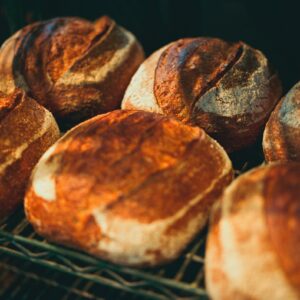
Baked Goods — Primary: TagaLite™ / Support: Allulose
| Ingredient | Use Rate | Delivers | Watch |
| TagaLite™ Tagatose | 8–15% | ✔ Browning ✔ Structure ✔ Flavor | ⚠ Over-browning; reduce temps 10–15°C |
| KetoseSweet™ Allulose | 2–5% | ✔ Moisture retention ✔ Softness | ⚠ Moisture migration |
Frozen Desserts — Primary: Allulose / Support: TagaLite™
| Ingredient | Use Rate | Delivers | Notes |
| KetoseSweet™ Allulose | 6–10% | ✔ Scoopability ✔ Creaminess ✔ Freeze/thaw stability | Backbone of the system |
| TagaLite™ Tagatose | 2–4% | ✔ Solids ✔ Sweetness | Support role |
Bars & Nutritional Systems — Hybrid Required
| Ingredient | Use Rate | Delivers | Watch |
| KetoseSweet™ Allulose | 3–6% | ✔ Water activity control ✔ Softness | ⚠ Hardening curves |
| TagaLite™ Tagatose | 5–10% | ✔ Bulk ✔ Sweetness ✔ Structure | ⚠ Moisture migration |
| Fiber (inulin / STF) | 10–25% | ✔ Water activity ✔ Texture over shelf life | — |
Beverages
| System Goal | Lead Ingredient | Total Rare Sugar Rate | Delivers |
| Clean sweetness base, minimal aftertaste | KetoseSweet™ Allulose | 2–5% combined | ✔ Smooth sweetness ✔ Low aftertaste |
| Sugar-like body and faster onset | TagaLite™ Tagatose | 2–5% combined | ✔ Faster onset ✔ More body |
Confectionery — Primary: TagaLite™
| Ingredient | Delivers | Watch |
| TagaLite™ Tagatose | ✔ Glass formation ✔ Structure ✔ Flavor development | ⚠ Hygroscopicity ⚠ Crystallization control |
9. Stop Choosing — Start Engineering
The winning systems don’t debate ingredients. They assign jobs. Here’s an example precision stack:
Allulose
Water control + softness
Humectancy, freeze-point, shelf stability
TagaLite™
Bulk + browning
Sucrose-like body, Maillard, flavor
Reb M / Monk Fruit
Sweetness efficiency
Peak sweetness at low use rate
Fiber
Structure + tolerance
Inulin, soluble tapioca, resistant dextrin
Glycera™
Reaction management
Controls Maillard kinetics; widens processing window
Ready to formulate? Contact your Icon Foods representative for TagaLite™ tagatose, KetoseSweet™ allulose, and Glycera™ organic vegetable glycerin samples, documentation, and formulation guidance. — sales@iconfoods.com · 310.455.9876