

by Thom King, CFS, Founder, Chairman, Chief Innovation Officer Icon Foods
Adaptogens, Sweetness Modulation, and the Future of Functional Beverages
The functional beverage category has evolved from a niche wellness segment into a full-contact collision between food science, consumer psychology, sensory engineering, and metabolic health positioning. Consumers are no longer simply looking for “energy” or “immune support.” They are increasingly seeking products positioned around stress resilience, mood support, cognition, sleep quality, gut-brain health, recovery, and emotional wellness. Adaptogens and functional botanicals have moved from the fringe into mainstream beverage innovation.
Yet beneath the glossy branding and carefully curated social media campaigns lies a stubborn formulation reality, some adaptogenic beverages taste awful.
Bitterness. Astringency. earthy mushroom notes. Delayed bitter bloom. Metallic linger. Drying polyphenolic finishes. Protein interactions. Low-pH instability. Sedimentation. Flavor collapse under thermal processing. The list reads like a quality assurance manager’s recurring nightmare.
This is precisely why sweetness modulation and temporal flavor engineering have become critical tools in modern functional beverage formulation.
Today’s successful functional beverages are no longer simply sweetened. They are strategically engineered to manage sensory timing, bitterness suppression, flavor bloom, sweetness persistence, and mouthfeel recovery. This is where modern sweetener systems and positive allosteric modulation technologies are changing the game.
The Rise of Adaptogens in Functional Foods and Beverages
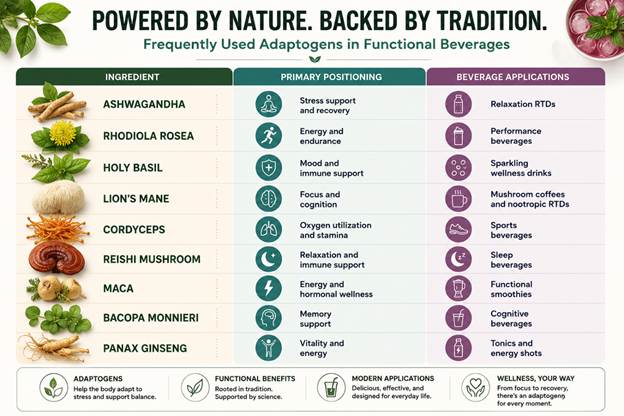
Adaptogens are broadly described as botanicals or fungi believed to support the body’s resistance to physical, emotional, and environmental stressors. While scientific substantiation varies depending on ingredient and application, several adaptogens have gained strong commercial traction in functional beverages due to consumer familiarity, emerging clinical data, and alignment with wellness positioning. Commonly used adaptogens include:
This is where advanced systems from Icon Foods including MonkSweet™ LS4, SteviaSweet™ RM95D, RA99M, Thaumatiq™ T10/V10/M10, and Glycera™ organic coconut vegetable glycerin are helping formulators solve some of the most difficult sensory challenges in modern beverage development.
Adaptogens are botanicals and fungi commonly positioned to support the body’s response to stress and environmental pressures. While scientific substantiation varies by ingredient and dosage, adaptogens continue to gain strong commercial traction due to consumer demand for wellness-focused functionality.
Frequently used adaptogens include:
| Ingredient | Primary Positioning | Beverage Applications |
|---|---|---|
| Ashwagandha | Stress support and recovery | Relaxation RTDs |
| Rhodiola rosea | Energy and endurance | Performance beverages |
| Holy basil | Mood and immune support | Sparkling wellness drinks |
| Lion’s Mane | Focus and cognition | Mushroom coffees and nootropic RTDs |
| Cordyceps | Oxygen utilization and stamina | Sports beverages |
| Reishi mushroom | Relaxation and immune support | Sleep beverages |
| Maca | Energy and hormonal wellness | Functional smoothies |
| Bacopa monnieri | Memory support | Cognitive beverages |
| Panax ginseng | Vitality and energy | Tonics and energy shots |
According to market data from Grand View Research and Innova Market Insights, adaptogenic beverages and functional mushroom beverages continue to demonstrate strong year-over-year global growth as consumers increasingly prioritize mental wellness and stress management.
Why Adaptogens Are So Difficult to Formulate
Many adaptogens contain:
- polyphenols
- triterpenoid saponins
- alkaloids
- flavonoids
- mushroom beta-glucans
- terpenoids
These compounds contribute to:
- bitterness
- lingering herbal notes
- earthy off-flavors
- throat catch
- metallic perception
- astringency
- sweetness suppression
Functional mushrooms can be especially difficult due to persistent earthy and sulfurous flavor notes combined with drying mouthfeel. When combined with:
- low-pH systems
- high-intensity sweeteners
- protein fortification
- thermal processing
- shelf-stable packaging
…the beverage can quickly become sensory chaos wearing a wellness label.
Temporal Engineering: The New Science of Beverage Design
Modern beverage formulation increasingly focuses on temporal sensory engineering. This includes:
- sweetness onset timing
- sweetness duration
- bitterness interruption
- flavor bloom
- aromatic enhancement
- mouthfeel continuity
One of the biggest failures in functional beverages is temporal mismatch:
- sweetness arrives too early
- bitterness arrives too late
- the mid-palate collapses
- harsh botanical linger dominates the finish
Consumers may tolerate this once. They rarely repurchase it. This is where modulation systems and mouthfeel technologies become critically important.
MonkSweet™ LS4 – typical beverage usage levels range from .015% titrating up to .025%
Building a More Sugar-Like Sweetness Curve
MonkSweet™ LS4 combines monk fruit mogrosides with advanced steviol glycoside technology to create a cleaner, more integrated sweetness profile. LS4 helps:
- soften bitterness edges
- improve sweetness continuity
- support fruit systems
- reduce temporal drop-off
- smooth lingering herbal harshness
This is especially useful in:
- mushroom RTDs
- sparkling wellness beverages
- nootropic sodas
- low-sugar teas
- botanical hydration systems
LS4 behaves less like a conventional sweetener and more like a sensory balancing tool.
SteviaSweet™ RM95D – typical beverage usage levels range from .025% titrating up to .035%
Cleaner Sweetness for Difficult Botanical Systems
RM95D provides a cleaner sweetness profile with reduced bitterness compared to traditional Reb A systems. RM95D can help:
- improve sweetness onset
- reduce bitterness stacking
- minimize dry finish perception
- enhance acid balance
- improve top-note fruit expression
This is particularly valuable in:
- clear RTDs
- high-acid systems
- functional sparkling beverages
- protein-enhanced beverages
One of the most common failures in adaptogenic beverages is “sweet upfront, bitter funeral procession on the back end.” RM95D helps tighten that sensory transition.
SteviaSweet™ RA99M– typical beverage usage levels range from .010% titrating up to .020%
Economical Sweetness Optimization
Adaptogenic beverages often carry elevated ingredient costs due to:
- mushroom extracts
- standardized botanicals
- nootropics
- specialty actives
RA99M provides a more economical pathway to improved sweetness performance while reducing the masking burden associated with older stevia systems. RA99M supports:
- bitterness reduction
- sweetness enhancement
- cleaner flavor systems
- improved cost-in-use
Particularly useful in:
- powdered beverage systems
- hydration mixes
- stick packs
- value-positioned RTDs
Thaumatiq™ T10, V10, and M10 – typical beverage usage levels range from 18 PPM titrating up to 24 PPM
Positive Allosteric Modulation at Parts-Per-Million Levels
Thaumatiq™ systems combine thaumatin with advanced glycoside modulation strategies to amplify sweetness perception and suppress harsh sensory attributes at extremely low use levels. These systems can:
- amplify sweetness
- extend sweetness duration
- improve flavor bloom
- soften bitterness
- reduce astringency
- improve flavor cohesiveness
Thaumatiq™ T10
Excellent for:
- sugar reduction
- sweetness enhancement
- acid balancing
- fruit-forward systems
Thaumatiq™ V10
Particularly effective in monk-fruit-forward systems requiring additional bitterness suppression and sweetness integration.
Thaumatiq™ M10
Designed for highly challenging systems including:
- mushroom beverages
- protein beverages
- botanical RTDs
- fortified wellness drinks
M10 performs exceptionally well in managing lingering bitterness and drying finishes common in adaptogenic systems.
Glycera™ Organic Coconut Vegetable Glycerin
Mouthfeel Engineering and Sensory Continuity
One of the biggest challenges in sugar-reduced adaptogenic beverages is sensory hollowness. When sugar is removed:
- bitterness becomes exposed
- acids feel sharper
- botanicals feel drier
- sweetness feels disconnected
- flavor systems lose density
This is where Glycera™ organic coconut vegetable glycerin becomes highly valuable. Derived from organic coconut oil, Glycera™ provides:
- clean-label positioning
- non-GMO status
- keto-friendly compatibility
- mild sweetness
- mouthfeel enhancement
- flavor rounding
Glycera™ functions as both a mouthfeel builder and temporal smoothing tool. It helps:
- rebuild body
- soften harsh transitions
- reduce throat catch
- improve mid-palate continuity
- support sweetness linger
- dampen astringency perception
Importantly, glycerin does not directly suppress bitterness the way thaumatin systems can. Instead, it softens and rounds the overall sensory experience, helping “stitch together” the sweetness curve. This becomes especially powerful when paired with:
- MonkSweet™ LS4
- RM95D
- RA99M
- Thaumatiq™ T10/V10/M10
Together, these systems create:
- improved sweetness architecture
- smoother temporal transitions
- fuller mouthfeel
- reduced bitterness exposure
- enhanced flavor cohesiveness
In many adaptogenic beverages, Glycera™ acts as the missing structural component preventing the beverage from feeling thin, harsh, or fragmented. Typical beverage usage levels range from:
- 0.5% to 3.0%
Most RTD systems perform optimally around:
- 1.0% to 2.0%
Applications include:
- mushroom beverages
- wellness RTDs
- nootropic drinks
- botanical hydration
- electrolyte beverages
- protein wellness systems
The Future of Functional Beverage Formulation
The next generation of functional beverages will not succeed solely because they contain trendy ingredients. They will succeed because they:
- Deliver meaningful functionality
- Maintain clean-label positioning
- Reduce sugar effectively
- Control formulation costs
- Survive processing and shelf life
- Taste exceptional
That final point remains the championship ring. Consumers may initially purchase adaptogenic beverages because of:
- stress support
- cognitive positioning
- mushroom trends
- wellness marketing
But they repurchase based on sensory experience. This is why advanced sweetness modulation, positive allosteric modulation, and mouthfeel engineering technologies are rapidly becoming foundational tools in functional beverage development. Because the future winners in functional beverages will not merely deliver efficacy.
They will deliver efficacy wrapped in a sensory experience so polished the consumer forgets they are drinking mushrooms, magnesium, adaptogens, polyphenols, and stress-management chemistry before a Monday morning meeting.
References
- Panossian A, Wikman G. Effects of Adaptogens on the Central Nervous System and Stress-Protective Activity. Pharmaceuticals. 2010;3(1):188-224.
- Kelly GS. Rhodiola rosea: A Possible Plant Adaptogen. Alternative Medicine Review. 2001;6(3):293-302.
- Shah SA et al. Effects of Ashwagandha on Stress and Anxiety. Indian Journal of Psychological Medicine. 2012.
- Friedman M. Mushroom Polysaccharides: Chemistry and Health Benefits. Journal of Agricultural and Food Chemistry. 2016.
- Innova Market Insights. Functional Beverage Trends Report. 2025.
- Grand View Research. Functional Beverage Market Analysis. 2025.
- DuBois GE. High-Intensity Sweeteners and Sweetness Modulation. Food Chemistry. 2016.
- Schiffman SS et al. Bitterness Suppression and Sweetness Modulation in Beverage Systems. Physiology & Behavior. 2000.
- Maga JA. Flavor Chemistry and Sensory Properties of Mushroom Products. CRC Critical Reviews in Food Science and Nutrition. 1981.
- Ranadheera CS et al. Food Matrix Effects on Functional Ingredient Performance. Current Opinion in Food Science. 2018.